

Courses
23-05-2023

Vote
-
For further training via the Zoom program or at our office? ?
Register a
Violation
We you
Contact youS.O.S.
0032 02 7322568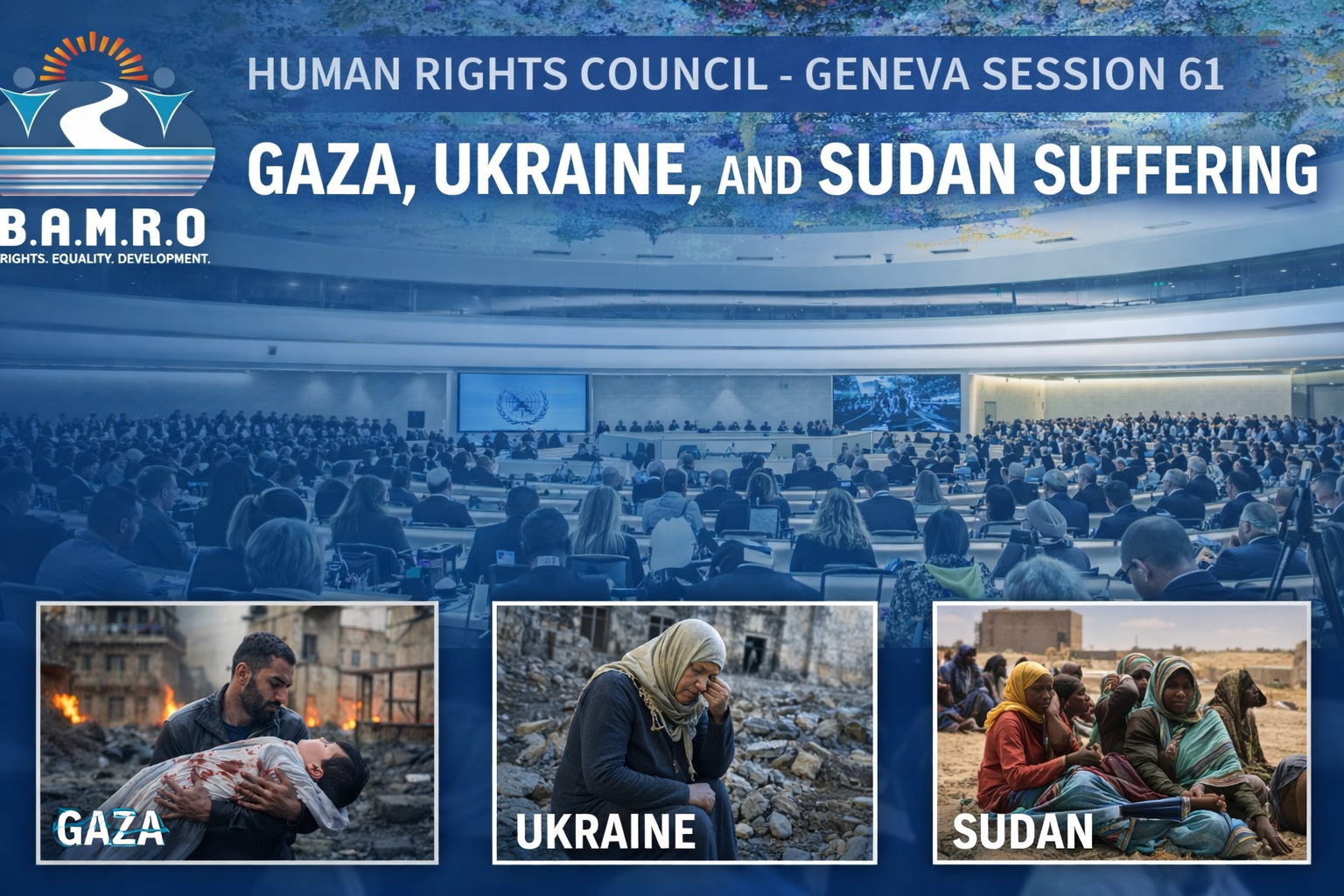
The Crisis in Sudan and the Test of the Effectiveness of the International Human Rights System: In Parallel with the 61st Session of the Human Rights Council
As the sixty-first session of the United Nations Human Rights Council convenes, the attention of the international community is directed toward several complex humanitarian crises, foremost among them the crisis in Sudan, which is currently considered one of the most severe human rights crises and humanitarian disasters in the contemporary world.
Since the outbreak of armed conflict in April 2023 between the Sudanese Armed Forces and the Rapid Support Forces, the country has witnessed an unprecedented deterioration in humanitarian and security conditions. Civilians have become the primary victims of escalating violence, institutional collapse, and the breakdown of essential services. According to reports from the United Nations and international humanitarian organizations, tens of thousands of people have been killed, while the number of internally displaced persons and refugees has exceeded 10 million, making the Sudanese crisis one of the largest displacement crises globally today.
Humanitarian data also indicate that approximately 25 million people — more than half of Sudan’s population — are in urgent need of humanitarian assistance amid widespread health system collapse, destruction of infrastructure, and disruption of food supply chains. United Nations agencies have warned of the risk of famine in several regions, particularly in Darfur and active conflict areas, due to severe food insecurity and obstruction of humanitarian aid delivery.
Human rights reports document serious violations that may amount to war crimes and crimes against humanity, including extrajudicial killings, conflict-related sexual violence, forced recruitment, forced displacement, and attacks against medical and civilian facilities, constituting clear violations of the Geneva Conventions, international humanitarian law, and international human rights law.
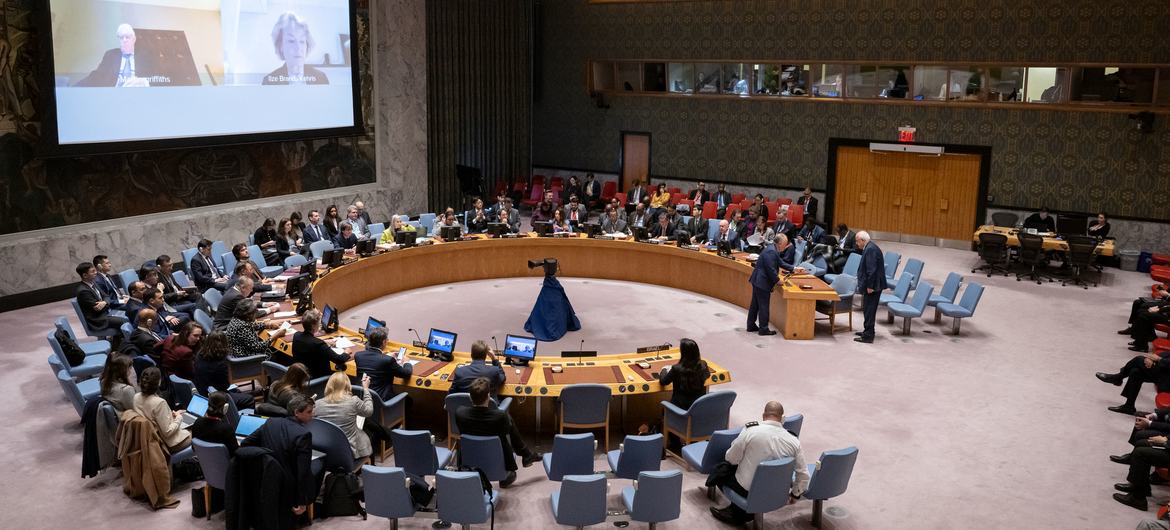
The importance of the current session of the Human Rights Council lies in its role as a key international platform for addressing these violations, strengthening international accountability mechanisms, ensuring civilian protection, and supporting humanitarian efforts. However, the primary challenge does not lie merely in issuing resolutions or political statements, but in ensuring their effective implementation on the ground amid complex political dynamics, multiple armed actors, and ongoing hostilities.
The international community, including the United Nations, Member States, and regional organizations, bears a legal and moral responsibility to act to end violations, support peace efforts, and ensure accountability, in line with principles of international responsibility to protect civilians and combat serious international crimes.
Civil society organizations also remain a central pillar in documenting violations, advocating for victims, raising international awareness of humanitarian suffering, and supporting transitional justice and accountability mechanisms.
In this context, the Belgian Organization for Human Rights and Development (BAMRO) closely follows the proceedings of the 61st session of the Human Rights Council and emphasizes the importance of taking concrete measures to enhance civilian protection in Sudan, ensure respect for international humanitarian and human rights law, achieve justice for victims, and support political pathways leading to an end to the conflict.
The crisis in Sudan represents a genuine test of the effectiveness of the international human rights system and the capacity of the international community to act collectively to confront grave violations, prevent the worsening of the humanitarian catastrophe, and protect human dignity during armed conflicts.
Listings
- 1
- 2
- 3
- 4
- 5