

Courses
23-05-2023
Vote
-
For further training via the Zoom program or at our office? ?
Register a
Violation
We you
Contact youS.O.S.
0032 02 7322568
Report on the Participation of BAMRO's Expanded Delegation in the First Three Days of the 62nd Session of the Human Rights Council
Belgian Association for Human Rights and Development (BAMRO)
Report on the Participation of BAMRO's Expanded Delegation in the First Three Days of the 62nd Session of the Human Rights Council
Geneva – 15 to 17 June 2026
The Belgian Association for Human Rights and Development (BAMRO), a non-governmental organization in Special Consultative Status with the United Nations Economic and Social Council (ECOSOC), participated in the first three days of the 62nd Session of the United Nations Human Rights Council held at the Palais des Nations in Geneva.
BAMRO was represented by an expanded delegation composed of representatives of the Association, human rights advocates, researchers, and civil society actors. This participation reflected BAMRO's commitment to strengthening the role of civil society within the United Nations human rights system and amplifying the voices of victims affected by serious human rights violations around the world.
During the first days of the session, the delegation focused on several priority human rights issues, particularly Eritrea, Sudan, and Palestine, while also attending the High Commissioner's opening address and discussions related to emerging challenges, including artificial intelligence and its impact on human rights.
First: A Significant Achievement on the Eritrea File
The Eritrea file represented one of the most important areas of BAMRO's engagement during the 62nd Session of the Human Rights Council.
In what many human rights defenders and civil society representatives considered a significant step forward in international advocacy for Eritrean victims, BAMRO contributed to bringing the voices of victims and their families to the United Nations by facilitating the participation of relatives of victims and individuals affected by serious human rights violations in Eritrea.
For the first time in nearly three decades, direct testimonies from relatives of Eritrean Muslim victims were presented during activities held in connection with the 62nd Session of the Human Rights Council. This important initiative helped draw renewed international attention to the suffering of a large segment of Eritrean citizens whose experiences have often remained underrepresented in international human rights discussions.
The testimonies highlighted a number of serious concerns, including:
-
Prolonged arbitrary detention;
-
Enforced disappearances;
-
Restrictions on freedom of expression and opinion;
-
Violations related to freedom of religion or belief;
-
Restrictions on religious education and religious practices;
-
Indefinite national service and its social and humanitarian consequences;
-
The situation of Eritrean refugees in neighboring countries.
BAMRO also participated in a specialized side event addressing violations of the rights of Christians in Eritrea and restrictions affecting freedom of religion and belief. Participants reviewed reports and testimonies concerning limitations imposed on certain religious communities and arrests linked to religious practices.
Throughout its engagement, BAMRO reaffirmed that the protection of human rights must extend to all victims without distinction, regardless of religion, ethnicity, or social background, in accordance with the universal principles of human rights.
The Association's contribution to the Eritrea file received positive recognition from several human rights defenders, experts, and representatives of international civil society organizations who commended BAMRO's efforts in amplifying victims' voices and increasing international attention to the human rights situation in Eritrea.
BAMRO also expressed its appreciation to Dr. Abdelsalam Babiker, the United Nations Special Rapporteur on the situation of human rights in Eritrea, upon the completion of his mandate. The Association praised his independent and professional efforts in documenting violations, monitoring developments, and ensuring that the Eritrean human rights situation remained on the agenda of United Nations human rights mechanisms.
Second: Monitoring Developments in Sudan
The BAMRO delegation paid particular attention to the deteriorating humanitarian and human rights situation in Sudan amid the ongoing armed conflict and its devastating impact on civilians.
Representatives of the Association attended discussions concerning updates from the Independent International Fact-Finding Mission for Sudan, which continued to document serious violations of international humanitarian law and international human rights law.
The discussions addressed issues including:
-
Attacks against civilians;
-
Conflict-related sexual violence;
-
Forced recruitment practices;
-
Mass displacement and forced migration;
-
Attacks on civilian infrastructure, including hospitals and educational facilities;
-
The worsening humanitarian crisis and obstacles to humanitarian access.
BAMRO emphasized the importance of strengthening civilian protection, ensuring unhindered humanitarian access, supporting independent international investigative mechanisms, combating impunity, and involving victims and Sudanese civil society organizations in future accountability and transitional justice processes.
The Association further stressed that the Sudan crisis has become one of the world's most severe humanitarian emergencies and requires sustained international attention and action.
Third: Participation in the Session of the United Nations High Commissioner for Human Rights
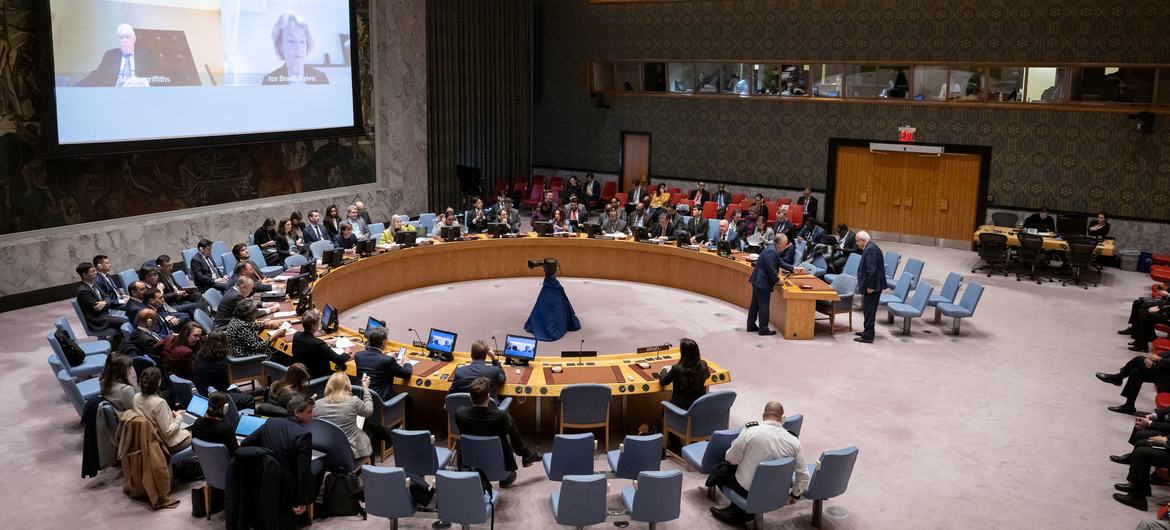
The BAMRO delegation attended the opening session of the 62nd Session of the Human Rights Council, during which United Nations High Commissioner for Human Rights Volker Türk presented his annual report.
The High Commissioner warned that the world is facing unprecedented challenges characterized by escalating armed conflicts, declining respect for international law, increasing polarization, and the spread of hate speech.
He highlighted the situations in Sudan, Gaza, Ukraine, Syria, and other conflict-affected regions, stressing the urgent need for accountability and the prevention of impunity for serious human rights violations.
Regarding Syria, the High Commissioner emphasized the importance of truth, justice, accountability, and support for victims, while reaffirming the need to protect the rights and dignity of all Syrians.
On artificial intelligence, Mr. Türk warned against the risks associated with the unregulated use of emerging technologies. He stressed that artificial intelligence must serve humanity and human rights rather than become a tool for mass surveillance, discrimination, manipulation, or violations of privacy and fundamental freedoms.
The BAMRO delegation followed these discussions with particular interest, recognizing the growing significance of artificial intelligence and its future implications for the protection of human rights worldwide.
Fourth: Monitoring the Work of the Independent International Commission of Inquiry on Palestine
The BAMRO delegation attended discussions relating to the Independent International Commission of Inquiry on the Occupied Palestinian Territory, including East Jerusalem, and Israel.
The Commission presented findings concerning the humanitarian and human rights consequences of the conflict, focusing on:
-
The protection of civilians during armed conflict;
-
The situation of women and children;
-
The impact of military operations on civilian populations;
-
Extensive damage to civilian infrastructure, healthcare facilities, and educational institutions;
-
Internal displacement;
-
Humanitarian access challenges.
The Commission also stressed the importance of compliance with international humanitarian law and international human rights law, as well as accountability for serious violations.
BAMRO followed these discussions closely as part of its commitment to promoting the protection of civilians in situations of conflict and supporting international efforts aimed at justice, accountability, and respect for international law.
Conclusion
The participation of the Belgian Association for Human Rights and Development (BAMRO) during the first three days of the 62nd Session of the Human Rights Council reflected the growing international role of the Association and its active contribution to global human rights discussions.
The Eritrea file represented a particularly important achievement through BAMRO's efforts to amplify the voices of Eritrean victims and their families within international human rights forums. At the same time, the Association continued its engagement with developments concerning Sudan and Palestine while participating in high-level discussions addressing contemporary human rights challenges, including artificial intelligence and the protection of civilians during armed conflicts.
BAMRO reaffirms its commitment to continuing its cooperation with the United Nations, international partners, and civil society organizations in promoting human dignity, strengthening accountability, and advancing the protection of human rights worldwide.
Belgian Association for Human Rights and Development (BAMRO)
Geneva – June 2026
Listings
- 1
- 2
- 3
- 4
- 5