

Courses
23-05-2023
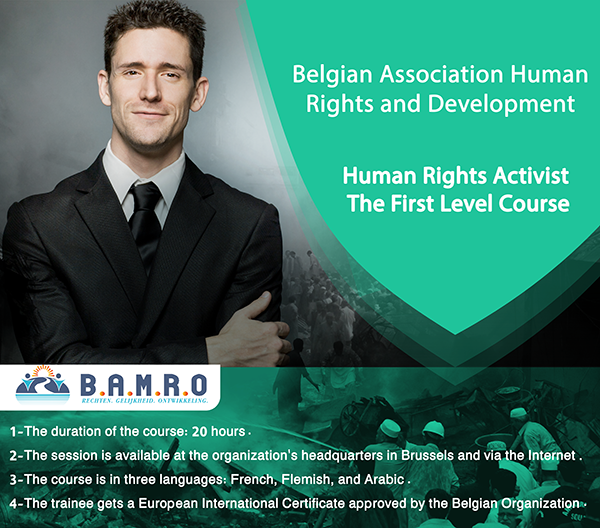
Vote
-
For further training via the Zoom program or at our office? ?
Register a
Violation
We you
Contact youS.O.S.
0032 02 7322568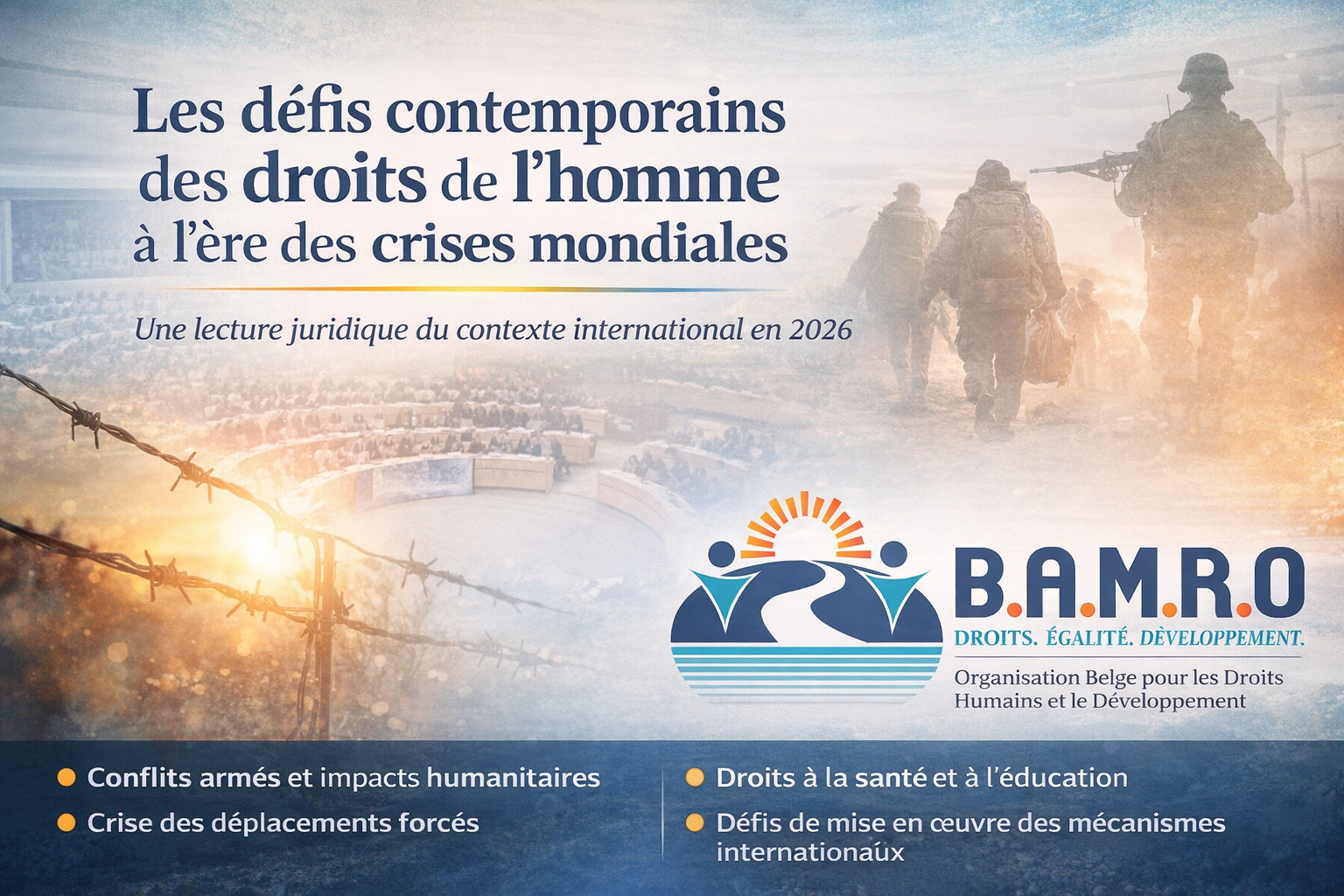
Contemporary Human Rights Challenges Amid Global Crises: A Legal Perspective on the International Context in 2026
Contemporary Human Rights Challenges Amid Global Crises: A Legal Perspective on the International Context in 2026
The Belgian Organization for Human Rights and Development (BAMRO), holding consultative status with the United Nations Economic and Social Council, closely monitors international human rights developments, particularly in light of escalating humanitarian crises and increasing pressure on the global human rights system.
Introduction
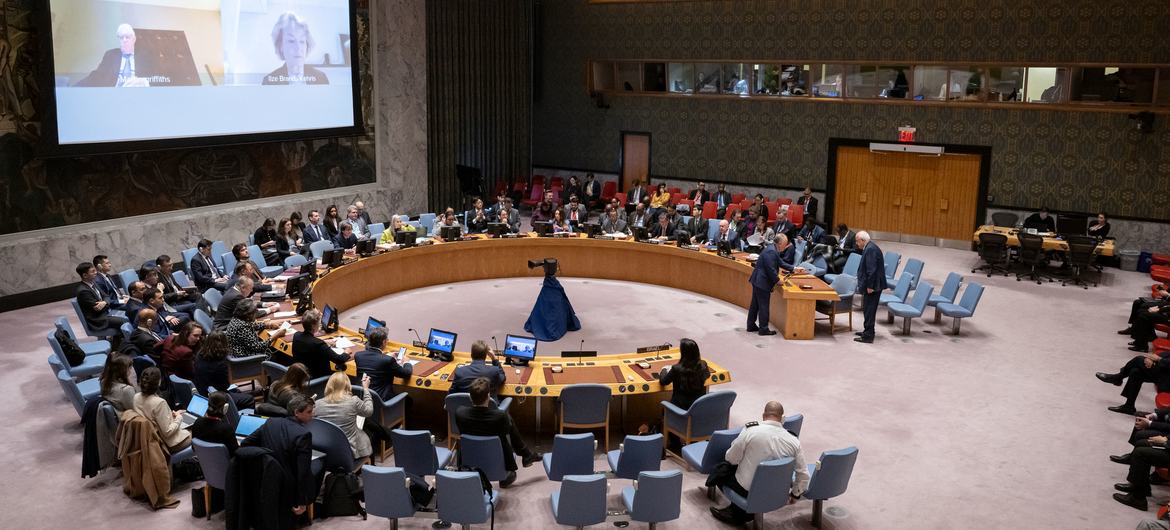
In 2026, the world is witnessing a significant escalation in humanitarian crises and armed conflicts, placing the human rights system under a serious test regarding its ability to respond effectively. These developments highlight the urgent need to reassess international commitments to human rights standards and the effectiveness of UN mechanisms in protecting civilians.
1. Escalation of Conflicts and Their Impact on Human Rights
Armed conflicts remain one of the main drivers of human rights deterioration, leading to serious violations such as:
- Targeting civilians and infrastructure
- Arbitrary detention and enforced disappearances
- Use of sexual violence as a weapon of war
- Restrictions on humanitarian access
The situation in Sudan stands as a stark example, with millions suffering from displacement, food insecurity, and a fragile international response.
2. Forced Displacement and Migration Crisis
Global displacement levels have reached unprecedented figures due to conflicts, climate change, and economic instability.
Affected populations face:
- Limited legal protection
- Discrimination in host countries
- Restricted access to essential services
- Risks of exploitation and human trafficking
This underscores the need for stronger international cooperation.
3. The Right to Development and Social Justice
Human rights today extend beyond civil and political rights to include:
- Education
- Healthcare
- Clean environment
- Adequate living standards
Inequality in access to these rights remains a major challenge.
4. Challenges in Implementing International Human Rights Mechanisms
Despite a strong legal framework, implementation faces obstacles:
- Lack of political will
- Weak accountability mechanisms
- Politicization of human rights issues
- Limited humanitarian resources
5. The Role of Civil Society
Civil society organizations play a key role in:
- Monitoring violations
- Raising awareness
- Supporting victims
- Influencing policies
BAMRO emphasizes strengthening partnerships and protecting human rights defenders.
Recommendations
- Strengthen international accountability
- Support humanitarian efforts
- Protect refugees
- Promote economic and social rights
- Empower civil society
- Encourage depoliticized cooperation
Conclusion
Human rights remain the cornerstone of global stability. Their protection requires genuine international commitment and cooperation.
Listings
- 1
- 2
- 3
- 4
- 5